August 26, 2023- January 13, 2024
Expressive! Landscape in the Modern Art
Galerie Henze & Ketterer
Online Viewing:
https://en.henze-ketterer.ch/ausstellungen/expressiv-landschaft-in-der-moderne
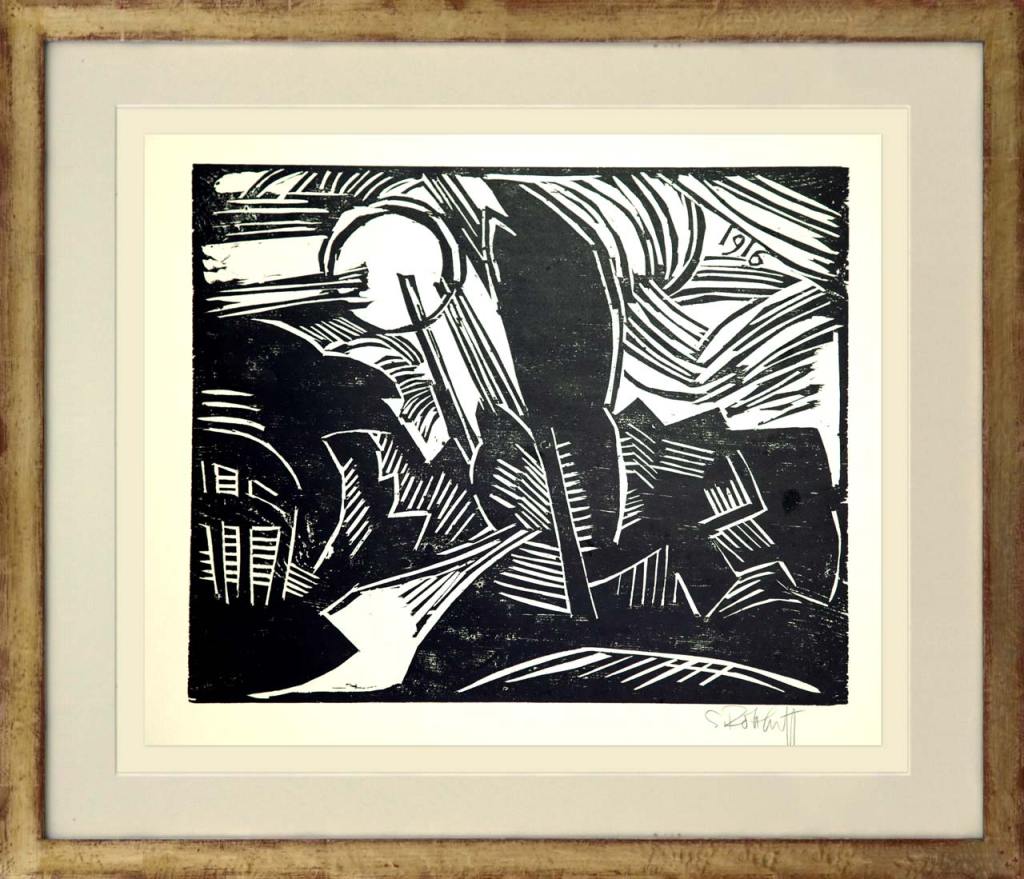
Depictions of landscapes run through the entire history of art and were sometimes more and sometimes less a popular and respected motif. Although landscapes were already depicted in antiquity and also in the Middle Ages, they served merely as settings and backgrounds for (mythical or biblical) scenes. It was not until the discovery of central perspective in the Renaissance that new possibilities opened up for creating the effect of pictorial depth in a landscape depiction. Thus, it was not until the 16th century that landscape painting was recognized as a genre in its own right, although at first it was not considered to be of great importance. Landscape painting finally gained prominence in the late 18th century with the advent of Romanticism, though it often continued to have a religious significance. The late 19th century saw the emergence of early Modern art landscape painting, beginning with Impressionism. With the invention of portable paints and canvases, artists were no longer confined to a studio. As a result, landscape painting en plein air became popular, allowing artists to paint outside in nature at any moment of inspiration. Towards the end of the century, artists such as Vincent van Gogh and Paul Cézanne ushered in the Modern art with increasingly expressive works. In the process, landscape painting became more colorful and abstract. Overall, landscape painting developed over time more and more from a very realistic to an individual representation of a landscape shaped by the impressions of the artists. This was also the case with the Expressionists in the 20th century, for whom landscape depictions served on the one hand to test new artistic means of expression, but on the other hand also reflected the artists’ relationship to their environment and to nature. The depictions of nature provide information about their attitude and world view and are thus able to convey something of the mentality and state of mind of the era in which they were created.